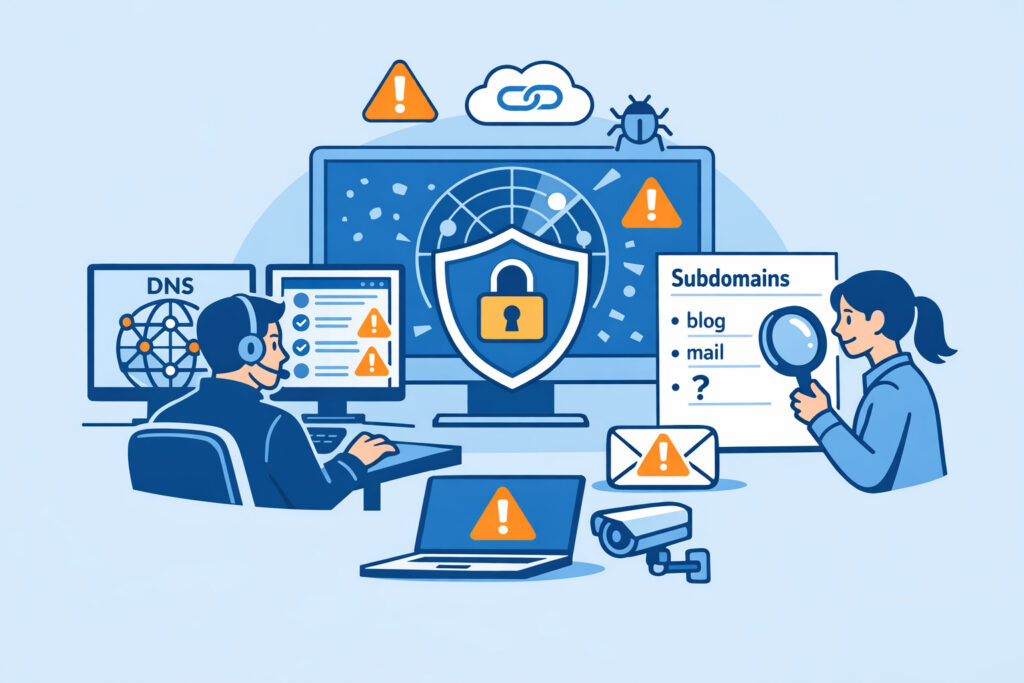
Real-time DNS surveillance is the practice of continuously monitoring your DNS infrastructure for unauthorized changes, misconfigurations, and emerging threats – as they happen, not hours or days later. For any organization that depends on its online presence, this kind of instant visibility is the difference between catching a problem before it causes damage and scrambling to explain a breach to your customers.
If you manage more than a handful of domains and subdomains, you already know how quickly things can drift out of control. DNS changes happen constantly – new records get added, old ones get forgotten, and sometimes someone makes an edit that nobody else knows about. Without real-time monitoring, you’re essentially flying blind.
Why Periodic DNS Audits Aren’t Enough Anymore
There’s a persistent myth in IT circles that running a DNS audit once a quarter – or even once a month – is sufficient. It’s not. The threat landscape moves faster than any manual review cycle. A subdomain that was perfectly safe on Monday can become a takeover target by Wednesday if the cloud service it pointed to gets deprovisioned.
I’ve seen organizations discover stale CNAME records pointing to decommissioned Azure instances – records that had been sitting there for months between audits. In one case, a forgotten staging subdomain was quietly hijacked and used to host a phishing page that targeted the company’s own customers. The irony? The subdomain was flagged for cleanup in the previous quarter’s audit report but never actually removed.
Real-time surveillance eliminates that gap. Instead of relying on someone to remember to check, you get an alert the moment a DNS record enters a dangerous state. That’s a fundamentally different security posture.
What Real-Time DNS Surveillance Actually Monitors
Effective DNS surveillance goes well beyond checking whether your domain resolves. Here’s what a proper system watches around the clock:
Record integrity. Every A, AAAA, CNAME, MX, TXT, and NS record is tracked for unauthorized modifications. If someone changes your MX record at 2 AM, you know about it at 2 AM – not next Tuesday.
Subdomain status. New subdomains appearing under your domain get flagged immediately. This catches both legitimate additions that weren’t documented and potentially malicious shadow subdomains created by attackers who’ve gained partial access.
Dangling DNS detection. When a CNAME or A record points to an IP address or service that no longer responds, that’s a dangling record – and it’s one of the most exploited attack vectors in subdomain takeover attacks. Real-time monitoring catches these the moment the target service goes offline.
Email authentication records. SPF, DKIM, and DMARC configurations are critical for preventing email spoofing. A missing or misconfigured TXT record can silently expose your domain to impersonation attacks. Continuous surveillance ensures these records stay correct.
TTL anomalies. Unusually low TTL values on records that shouldn’t change frequently can indicate an attacker preparing for a DNS hijacking attempt – they lower the TTL first so their malicious change propagates faster.
Building Your DNS Surveillance Strategy
Starting with real-time DNS surveillance doesn’t require ripping out your existing infrastructure. Here’s a practical approach:
Step 1: Know what you have. You can’t monitor what you don’t know exists. Run a full subdomain discovery scan first. Most organizations are surprised to find 30–50% more subdomains than they thought they had. Legacy test environments, forgotten campaign landing pages, developer sandboxes – they all add up.
Step 2: Establish your baseline. Document the expected state of every DNS record. This becomes your reference point. Any deviation from this baseline triggers an investigation.
Step 3: Set alert thresholds. Not every DNS change is an emergency. A planned migration that updates A records is normal. An unexpected CNAME modification on a production subdomain at midnight is not. Configure your alerting to distinguish between routine changes and genuine anomalies.
Step 4: Integrate with your incident response. DNS alerts should feed directly into your existing security operations workflow. If your team uses a SIEM or ticketing system, make sure DNS events land there automatically.
Step 5: Review and refine. After the first month, review your alert volume. Too many false positives and your team will start ignoring alerts – which defeats the entire purpose. Tune your thresholds based on real operational data.
The Cost of Not Watching in Real Time
Let’s put some numbers to this. The average time to detect a subdomain takeover without continuous monitoring is 45–60 days. During that window, an attacker can host phishing pages, distribute malware, intercept emails, or damage your brand reputation – all under your own domain name.
DNS downtime from misconfigurations costs online businesses an estimated $5,600 per minute on average for large enterprises. Even for smaller organizations, a DNS outage during business hours means lost revenue, lost customer trust, and hours of engineering time spent on firefighting instead of building.
Real-time surveillance compresses that detection window from weeks to minutes. The ROI isn’t theoretical – it’s the incident that didn’t escalate because you caught it early.
What DNSVigil Brings to the Table
DNSVigil combines continuous DNS health monitoring with automatic subdomain discovery in a single platform. Instead of juggling separate tools for record checks, subdomain enumeration, and alert management, you get a unified view of your entire domain’s DNS infrastructure.
The platform automatically discovers all subdomains associated with your primary domain – including ones you didn’t know about – and monitors their DNS health around the clock. When a record enters a risky state, such as pointing to a decommissioned service or missing critical email authentication settings, you get an immediate alert. This is particularly valuable for organizations managing multi-subdomain environments where manual tracking simply doesn’t scale.
Frequently Asked Questions
How quickly should a real-time DNS monitoring system detect changes?
A good system detects changes within minutes of propagation, not hours. The exact timing depends on polling intervals and TTL values, but anything longer than 15 minutes isn’t truly real-time surveillance. Look for platforms that check continuously rather than on fixed schedules.
Does real-time DNS surveillance replace the need for periodic audits?
It replaces most of the manual checking, but not the strategic review. Continuous monitoring catches changes as they happen, but you still benefit from a quarterly review of your overall DNS architecture – are your naming conventions consistent, is your record hygiene improving, are there subdomains that should be decommissioned entirely?
Is DNS surveillance only relevant for large enterprises?
Absolutely not. Small and mid-sized businesses are often more vulnerable because they lack dedicated security teams. A single forgotten subdomain on a five-domain portfolio carries the same takeover risk as one on a five-hundred-domain portfolio. The attack doesn’t care about your company size.
Real-time DNS surveillance isn’t a luxury or an optional add-on to your security stack. It’s a foundational layer that makes everything else work better. When you know the exact state of your DNS infrastructure at every moment, you can respond to threats before they materialize – and that’s the definition of a first line of defense.