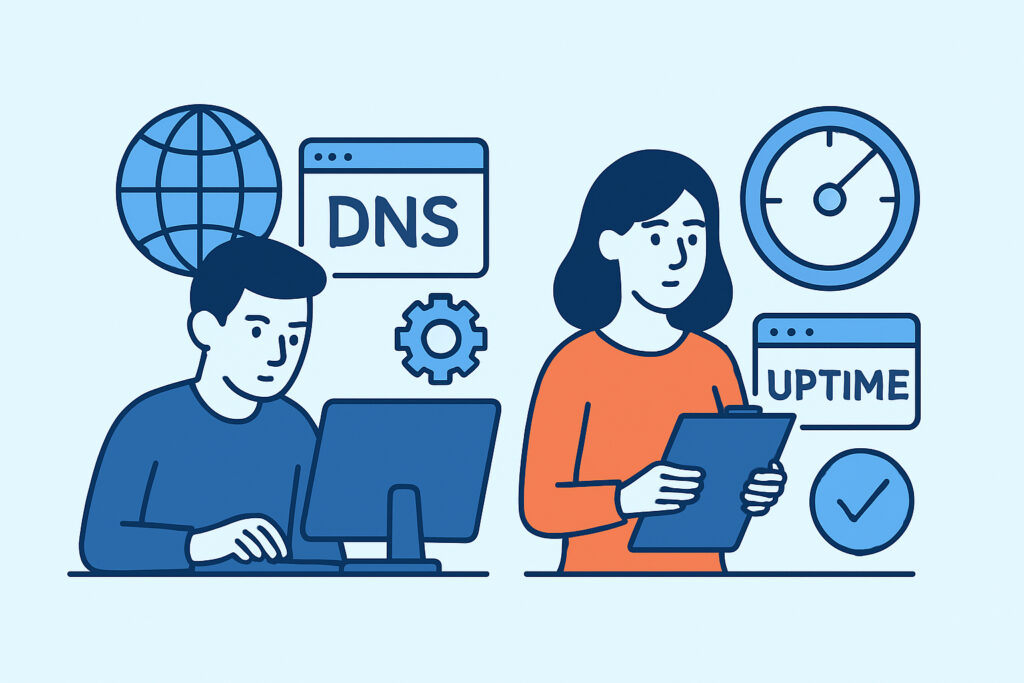
Many IT professionals assume DNS monitoring and uptime monitoring are the same thing, but understanding the difference between DNS monitoring and uptime monitoring is crucial for maintaining a secure and reliable web presence. While both serve important roles in infrastructure management, they monitor completely different aspects of your digital systems and catch entirely different types of problems.
DNS monitoring focuses on the health and security of your domain name system records, while uptime monitoring checks whether your websites and services are accessible to users. Think of DNS monitoring as watching the phone book that tells browsers where to find your servers, and uptime monitoring as checking whether those servers actually answer when contacted.
What DNS Monitoring Actually Does
DNS monitoring continuously watches your domain name system infrastructure for changes, misconfigurations, and security threats. It tracks DNS records across all your domains and subdomains, alerting you when records change unexpectedly or point to incorrect destinations.
The monitoring covers A records, CNAME records, MX records, TXT records, and other DNS entries that control how traffic reaches your services. It also monitors critical security records like SPF, DKIM, and DMARC that prevent email spoofing and protect your domain reputation.
One common scenario involves a marketing team setting up a temporary campaign subdomain that points to a third-party service. Months later, the campaign ends and the team forgets about the subdomain, but the DNS record remains active. If that third-party service expires or gets compromised, the abandoned subdomain becomes a security liability. DNS monitoring best practices include catching these situations before they become problems.
DNS monitoring also detects when legitimate records get modified without authorization. Attackers sometimes attempt to redirect traffic by changing DNS records, and this type of monitoring provides the first line of defense against such attacks.
How Uptime Monitoring Works Differently
Uptime monitoring takes a completely different approach. It simulates user behavior by sending requests to your websites and services, measuring response times and checking for proper functionality. The focus is on availability and performance rather than DNS configuration.
This type of monitoring sends HTTP requests to your web servers, tests database connections, and verifies that specific pages load correctly. It measures metrics like response time, error rates, and service availability from multiple geographic locations.
Uptime monitoring catches problems like server crashes, network outages, database failures, and application errors. It tells you when users cannot access your services, regardless of whether the DNS records are correct.
The key difference becomes clear in failure scenarios. If your DNS records point to the wrong server, uptime monitoring might still show everything as “up” if that wrong server responds normally. Meanwhile, users trying to reach your actual service get directed to the wrong place entirely.
Why You Need Both Types of Monitoring
A common misconception is that uptime monitoring covers all your bases. Many administrators think that if their uptime monitors show green status across the board, their entire infrastructure is healthy. This assumption misses critical DNS-layer vulnerabilities.
DNS problems often fly under the radar of traditional uptime checks. A subdomain pointing to an expired service might respond with a generic “domain for sale” page, which registers as “up” to basic uptime monitoring. Meanwhile, attackers could exploit that misconfigured subdomain for phishing campaigns using your domain name.
Consider a scenario where your main website works perfectly, but an old API subdomain points to a decommissioned server. Uptime monitoring focused on your primary services would miss this completely, while DNS monitoring would flag the stale record immediately.
Another gap appears with email security. Your website might load normally, but misconfigured SPF or DKIM records could allow attackers to send spoofed emails using your domain. Understanding SPF and DKIM records helps illustrate why DNS-specific monitoring is essential for email security.
Integration Points and Overlap
While DNS monitoring and uptime monitoring serve different purposes, they work together to provide comprehensive infrastructure oversight. DNS monitoring catches configuration problems that uptime monitoring might miss, while uptime monitoring verifies that correctly configured services actually work.
Smart monitoring strategies combine both approaches. When DNS monitoring detects a record change, uptime monitoring can verify that the new destination responds correctly. When uptime monitoring shows intermittent failures, DNS monitoring can confirm whether DNS propagation issues contribute to the problem.
The timing of alerts also differs significantly. DNS monitoring typically provides earlier warnings about potential problems, while uptime monitoring reports active service disruptions. This difference in timing makes DNS monitoring valuable for preventive maintenance rather than just incident response.
Some advanced monitoring systems integrate both capabilities, correlating DNS changes with performance metrics to provide clearer insights into infrastructure health.
Setting Up Effective Monitoring Coverage
Start with comprehensive subdomain inventory to ensure DNS monitoring covers your entire digital footprint. Many organizations discover forgotten subdomains only after security incidents occur.
Configure DNS monitoring to track all record types relevant to your infrastructure. Focus on A records, CNAME records, MX records, and security-related TXT records. Set up alerts for any unauthorized changes to these critical records.
For uptime monitoring, prioritize user-facing services and critical backend systems. Test from multiple geographic locations to catch regional connectivity issues that might not affect your primary data center.
Establish clear escalation procedures for different types of alerts. DNS security alerts often require immediate attention, while minor uptime fluctuations might only need investigation during business hours.
Regular testing ensures both monitoring systems work correctly. Intentionally make controlled changes to test whether DNS monitoring catches modifications promptly. Similarly, temporarily block access to test services to verify uptime monitoring sensitivity.
Common Monitoring Mistakes to Avoid
The biggest mistake is treating DNS monitoring as optional. Many security teams focus exclusively on uptime monitoring and miss critical DNS-layer vulnerabilities until attackers exploit them.
Another frequent error involves monitoring only primary domains while ignoring subdomains. Modern organizations typically use dozens or hundreds of subdomains for various purposes, and each represents a potential attack vector if misconfigured.
Over-reliance on manual DNS audits creates dangerous gaps. By the time quarterly manual reviews detect problems, significant damage may already occur. Automated continuous monitoring provides much better protection than periodic manual checks.
Some teams also make the mistake of configuring overly sensitive uptime monitoring that creates alert fatigue, while simultaneously running overly permissive DNS monitoring that misses important changes. Balance is crucial for both systems.
Frequently Asked Questions
Can uptime monitoring detect DNS hijacking attacks?
Uptime monitoring typically cannot detect DNS hijacking reliably. If attackers redirect your DNS to their servers that respond normally, uptime checks might show everything as working fine while users get directed to malicious sites. DNS monitoring specifically watches for unauthorized record changes that indicate hijacking attempts.
How quickly do DNS monitoring and uptime monitoring detect problems?
DNS monitoring can detect record changes within minutes of propagation, while uptime monitoring usually identifies service failures within 1-5 minutes depending on check frequency. DNS monitoring often provides earlier warning of potential issues before they impact users.
Do I need different tools for DNS monitoring versus uptime monitoring?
Most traditional uptime monitoring tools do not include comprehensive DNS monitoring capabilities. You typically need specialized DNS monitoring solutions that focus on record tracking, subdomain discovery, and DNS security. Some platforms combine both features, but dedicated DNS monitoring provides more thorough coverage.
Building a Complete Monitoring Strategy
Effective infrastructure monitoring requires both DNS monitoring and uptime monitoring working together. DNS monitoring protects against configuration errors and security threats at the domain level, while uptime monitoring ensures your services remain accessible and responsive.
The investment in comprehensive monitoring pays dividends in prevented security incidents and reduced downtime. Organizations that monitor only uptime miss critical DNS-layer vulnerabilities that attackers increasingly target. Those that ignore uptime monitoring in favor of DNS-only solutions miss performance issues that affect user experience.
Start with automated DNS monitoring to establish visibility into your complete domain infrastructure, then layer uptime monitoring on top to verify service availability. This combination provides the comprehensive coverage modern digital infrastructure demands.