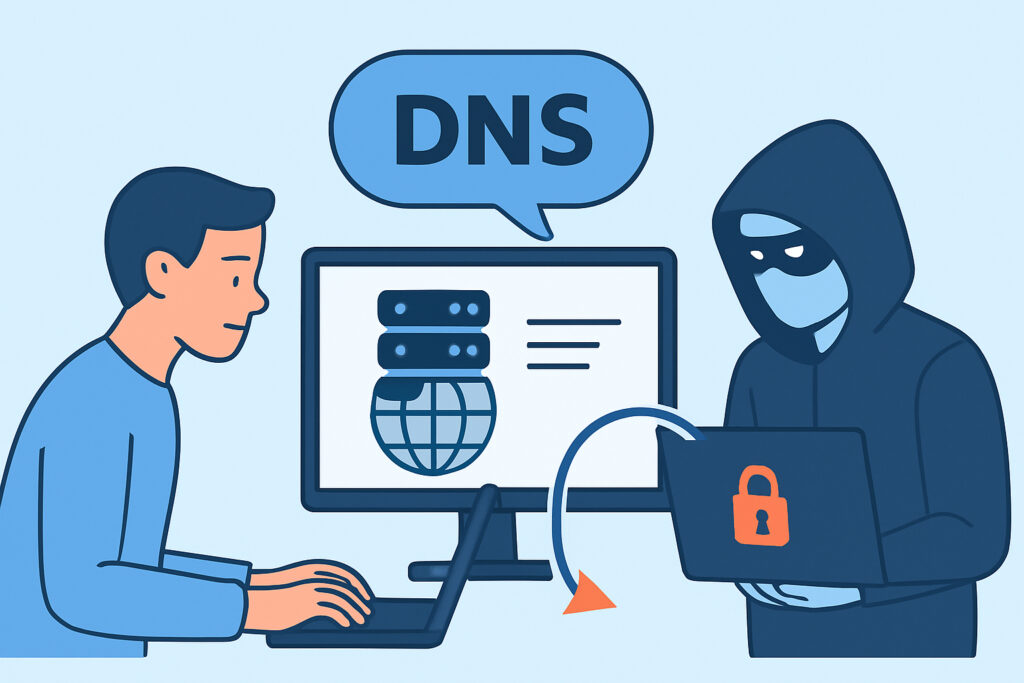
DNS Tunneling: How Attackers Exfiltrate Data Through DNS
Most firewalls treat DNS traffic as harmless background noise, which is exactly why DNS tunneling has become one of the most reliable ways attackers move stolen data out of a network undetected. If you’re responsible for network security, understanding how this technique works – and how to spot it – is no longer optional, because DNS queries pass through almost every perimeter control without a second look.
What DNS Tunneling Actually Is
DNS tunneling encodes data inside DNS queries and responses, using the domain name system as a covert communication channel. Instead of using DNS for its intended purpose – resolving hostnames to IP addresses – attackers embed chunks of stolen data, command-and-control instructions, or entire file transfers inside subdomain labels and TXT records.
The mechanics are simple in concept. An attacker registers a domain they control, sets up an authoritative name server for it, and installs a small client on the compromised machine. That client breaks up the data it wants to exfiltrate into small chunks, encodes each chunk (often base32 or base64) as a subdomain, and sends a lookup like c2FsZXNkYXRhMjAyNg.exfil.attacker-domain.com. The query travels through the victim’s normal DNS resolver, out to the internet, and eventually lands on the attacker’s authoritative server, which decodes the subdomain and reassembles the data on the other end.
Why This Technique Works So Well
DNS was designed to be fast, lightweight, and mostly unauthenticated. Every device on a network needs to resolve names constantly, so blocking DNS outright isn’t realistic. Most organizations allow outbound UDP/TCP port 53 traffic to flow freely, and many security tools still treat DNS as low-risk metadata rather than a data channel worth inspecting.
Attackers exploit that trust gap. A single exfiltrated database dump might generate thousands of DNS queries, but each one looks like routine resolution traffic unless someone is specifically looking at query patterns, entropy, and volume per domain.
A Realistic Scenario
Picture a mid-sized company where an employee opens a malicious attachment that drops a lightweight backdoor. The malware doesn’t try to open an HTTP connection to a suspicious IP – that would get flagged by the proxy or EDR agent within minutes. Instead, it starts issuing DNS queries to a domain that was registered two weeks earlier and has a low reputation score, but nobody’s watching for that specifically.
Over several hours, the malware slowly tunnels out credential hashes, internal file listings, and eventually a handful of spreadsheets, one encoded chunk at a time. The traffic never trips a data-loss-prevention rule because DLP tools typically inspect HTTP, email, and file transfer protocols – not DNS payloads. By the time anyone notices unusual query volume to an unfamiliar domain, the exfiltration is long finished.
This is the pattern seen repeatedly in incident response work: the initial compromise gets caught eventually, but the DNS channel used for exfiltration or command-and-control often gets discovered only in hindsight, during log review.
Busting the Myth: “DNS Tunneling Requires Sophisticated Attackers”
A common misconception is that DNS tunneling is a rare, advanced-persistent-threat technique reserved for nation-state actors. In reality, open-source tools that build DNS tunnels are widely available and require minimal setup. Frameworks used for legitimate penetration testing get repurposed by lower-skilled attackers constantly, and commodity malware families have included DNS-based C2 modules for years. The barrier to entry is low – the barrier to detection is what’s actually high.
How to Detect DNS Tunneling on Your Network
Detection comes down to watching for patterns that don’t match normal resolution behavior:
1. Unusual query volume – A single host issuing hundreds or thousands of queries to one domain in a short window is abnormal for legitimate browsing or application traffic.
2. High entropy subdomains – Random-looking, long alphanumeric strings as subdomain labels are a strong indicator of encoded data rather than a real hostname.
3. TXT and NULL record abuse – These record types carry more payload per query and are favored by tunneling tools; a spike in TXT lookups to obscure domains is worth investigating.
4. Newly registered or low-reputation domains – Correlating DNS logs against domain age and reputation feeds helps surface suspicious destinations quickly.
5. Consistent query intervals – Beaconing behavior, where queries fire at regular intervals regardless of user activity, points to automated malware rather than a human browsing.
None of these signals is definitive on its own, which is why effective monitoring correlates several indicators together rather than alerting on a single rule.
Reducing Your Exposure
Full prevention of DNS tunneling is difficult because you can’t block DNS itself, but you can significantly raise the cost and visibility for attackers.
Restrict which internal systems are allowed to query external DNS resolvers directly – forcing all lookups through an internal resolver you control gives you a single choke point for logging and inspection. Enable DNS query logging and retain it long enough to support investigations; many organizations discover they had no logs to review after an incident because retention was set to days instead of weeks.
Deploy DNS-layer filtering that blocks known malicious and newly registered domains before a resolution ever completes. Pair that with continuous monitoring that flags anomalous query patterns and unexpected DNS record changes across your own domains and subdomains, since attackers frequently stage infrastructure on subdomains of compromised or forgotten domains before using them for tunneling. Reviewing your DNS monitoring alerts regularly, rather than only after something breaks, closes the gap between compromise and detection.
FAQ
Can DNS tunneling be completely blocked?
Not entirely, since DNS is required for normal internet function. You can reduce risk substantially by forcing all DNS traffic through monitored internal resolvers, filtering known bad domains, and alerting on abnormal query behavior.
Is DNS tunneling only used for data theft?
No. It’s also commonly used for command-and-control communication, allowing malware to receive instructions from an attacker even when other outbound channels are blocked or heavily monitored.
How is DNS tunneling different from DNS spoofing or hijacking?
DNS tunneling abuses the query/response mechanism to smuggle data, while spoofing and hijacking involve manipulating DNS answers to redirect users to malicious destinations. They’re distinct techniques that can occasionally be combined in the same attack chain.
Staying Ahead of a Hard-to-See Threat
DNS tunneling is effective precisely because it hides in a protocol everyone assumes is safe. The organizations that catch it are the ones treating DNS logs as a genuine security data source – reviewing query patterns, watching for unfamiliar domains, and keeping visibility into every subdomain and resolver path in their environment, rather than assuming DNS traffic doesn’t need the same scrutiny as web or email traffic.