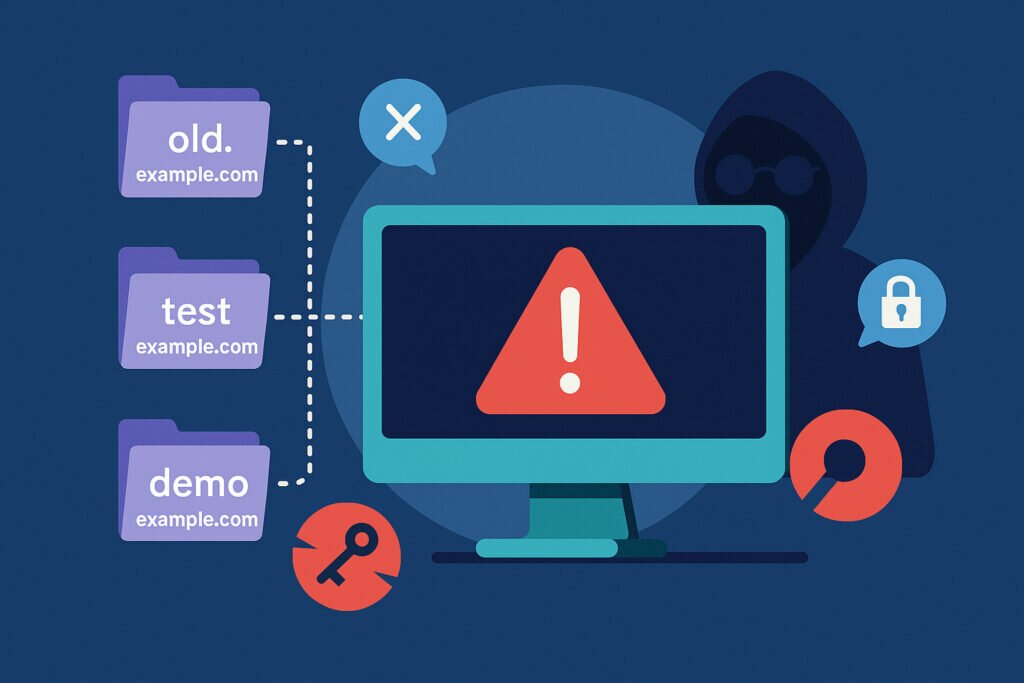
Every organization has them. Those forgotten subdomains from three years ago when the marketing team launched a campaign. The staging environment someone set up for a project that never went live. The test API endpoint that was supposed to be temporary. They’re still there in your DNS records, quietly creating vulnerabilities that most security teams don’t even know exist.
Legacy subdomains represent one of the most overlooked attack vectors in modern cybersecurity. While companies invest heavily in firewalls, intrusion detection systems, and employee training, they often have dozens or even hundreds of forgotten subdomains pointing to servers they no longer control. It’s like leaving keys to your house scattered around the neighborhood, except you’ve forgotten where you left them.
Why Legacy Subdomains Are So Dangerous
The problem isn’t just that these subdomains exist – it’s that they often point to resources that no longer belong to you. Here’s a real scenario I encountered last year: A mid-sized company had a subdomain pointing to an AWS S3 bucket they’d created for a temporary marketing campaign. The campaign ended, they deleted the bucket, but nobody thought to remove the DNS record.
Six months later, an attacker registered a new S3 bucket with the same name (which AWS allows after deletion) and suddenly had a legitimate-looking subdomain of a trusted company pointing to content they controlled. They used it for a phishing campaign that was remarkably effective because the URL looked completely legitimate.
This type of attack, known as subdomain takeover, is surprisingly common. According to recent research, approximately 10% of domains in the Alexa top 50,000 have at least one subdomain vulnerable to takeover. That’s not a small problem – it’s an epidemic that most organizations don’t even realize they’re facing.
The Forgotten Infrastructure Problem
Organizations accumulate subdomains faster than they realize. Every new project, test environment, or service integration adds another entry to your DNS records. Development teams spin up new environments. Marketing launches campaigns. Partners get dedicated API endpoints. Each one is carefully planned and implemented.
But what happens when projects end? When developers move on? When services get decommissioned? In my experience working with various companies, the DNS records rarely get cleaned up. There’s no process, no ownership, and often no awareness that cleanup is even necessary.
I’ve seen companies with over 300 active DNS records where IT could only account for about half of them. The rest were mysteries – remnants of past projects, experiments, or services that had been shut down years ago. Each one represented a potential security hole.
Beyond Subdomain Takeovers
The risks extend far beyond simple subdomain takeovers. Legacy subdomains can expose sensitive information, create confusion for legitimate users, damage your brand reputation, and provide attackers with reconnaissance information about your infrastructure.
A forgotten subdomain pointing to an old version of your application might contain unpatched vulnerabilities. Even if the subdomain isn’t actively used, it could provide attackers with valuable information about your technology stack, naming conventions, or infrastructure setup. Security through obscurity isn’t real security, but why hand attackers a roadmap?
There’s also the DNS configuration itself. Old subdomains might have missing or misconfigured SPF, DKIM, or DMARC records, making them perfect for email spoofing attacks. An attacker could send emails that appear to come from your domain, and many email security systems would let them through because the DNS records check out.
How Organizations Lose Track
The root cause is usually organizational, not technical. DNS management often falls into a gap between departments. Developers create subdomains for projects. Marketing needs them for campaigns. IT manages the DNS infrastructure. But who tracks what’s actually in use?
When employees leave, their knowledge of specific subdomains often leaves with them. Documentation is rarely comprehensive. Even when it exists, it’s seldom kept up to date. The result is an ever-growing collection of DNS records that nobody fully understands.
Cloud services make this worse. It’s easy to spin up resources, point subdomains at them, and forget about them. When you shut down that cloud service, the DNS record remains, creating an immediate vulnerability if someone else claims that resource identifier.
The Discovery Challenge
You can’t protect what you don’t know about. That’s the fundamental challenge with legacy subdomains. Traditional security scanning focuses on known assets. But how do you scan for subdomains you’ve forgotten exist?
Manual audits are time-consuming and error-prone. Spreadsheets become outdated the moment they’re created. Without automated discovery and continuous monitoring, you’re essentially playing security whack-a-mole – except you can’t see most of the moles.
Taking Control of Your DNS Infrastructure
The solution starts with visibility. You need to know every subdomain associated with your domain, whether you created it intentionally or not. Automated subdomain discovery tools can find these forgotten entries by scanning DNS records, certificate transparency logs, and other public sources.
Once you know what’s out there, you need continuous monitoring. DNS records should be tracked like any other critical asset. When a subdomain points to a resource you no longer control, you need to know immediately – not six months later when it’s being used in an attack.
Regular audits should be part of your security routine. Every subdomain should have an owner, a purpose, and a review date. If nobody can explain why a subdomain exists, it probably shouldn’t. Implement a decommissioning process that includes DNS cleanup. When projects end, make DNS record removal part of the shutdown checklist.
Prevention Is Easier Than Cleanup
The best approach is preventing legacy subdomains from accumulating in the first place. Establish clear policies about subdomain creation. Require documentation and ownership assignment. Build DNS cleanup into your project lifecycle.
Consider using separate domains for different purposes. Test environments don’t need to be subdomains of your production domain. This limits your exposure if something gets forgotten.
Your digital infrastructure is larger than you think. Those forgotten subdomains aren’t harmless remnants of past projects – they’re active security vulnerabilities waiting to be exploited. The organizations that take DNS security seriously are the ones that won’t end up in breach reports. The question isn’t whether you have legacy subdomains creating risk. The question is whether you’ll find them before an attacker does.