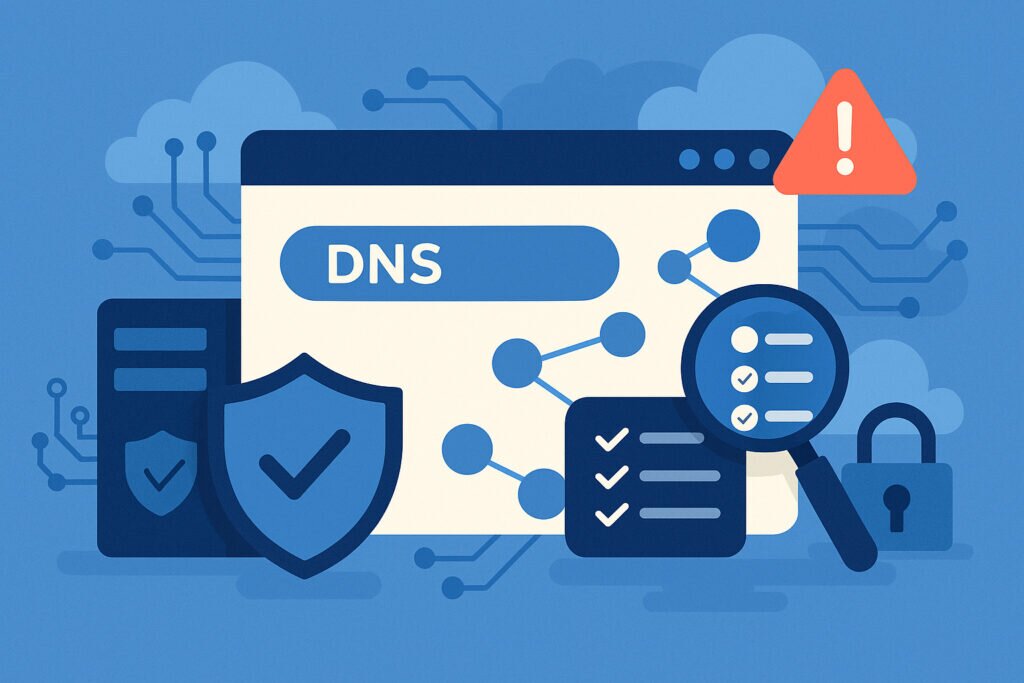
When most people think about web security, they picture firewalls, SSL certificates, and antivirus software. But there’s a fundamental component that often gets overlooked, even though it’s involved in virtually every online interaction you make: the Domain Name System, or DNS. Understanding DNS’s role in security architecture isn’t just academic knowledge – it’s essential for anyone responsible for protecting a web presence, whether you’re running a small business website or managing enterprise infrastructure.
DNS is essentially the internet’s phonebook, translating human-readable domain names like example.com into IP addresses that computers use to communicate. But this seemingly simple translation process has become a critical battleground in modern cybersecurity. The problem is that DNS was designed in the 1980s, long before security was a primary concern. Today’s threat landscape is vastly different, and DNS has become both a target for attacks and a powerful tool for defense.
Why DNS Matters More Than You Think
Every time someone visits your website, sends you an email, or accesses any service connected to your domain, DNS is involved. This makes it an attractive target for attackers. A compromised DNS record can redirect your customers to phishing sites, intercept emails, or take your entire online presence offline. I learned this the hard way years ago when a client’s DNS records were hijacked. Within hours, their customers were being redirected to a fake version of their site designed to steal login credentials. The damage to their reputation took months to repair.
What makes DNS particularly dangerous from a security perspective is that most organizations don’t monitor it closely enough. You might have sophisticated intrusion detection systems and security teams monitoring your servers 24/7, but if someone changes a DNS record to point your subdomain to a server they control, would you even notice? In many cases, organizations only discover DNS problems when customers start complaining or when it’s far too late.
The Subdomain Problem Nobody Talks About
Here’s something that surprises most people: the average organization has no idea how many subdomains they actually have. Over time, companies create subdomains for testing environments, temporary campaigns, partner integrations, or employee projects. Many of these are eventually forgotten, but their DNS records often remain active.
These forgotten subdomains create what security professionals call “shadow IT” – infrastructure that exists outside your awareness and control. I’ve worked with companies that thought they had maybe twenty subdomains, only to discover they actually had over a hundred. Each one of these represents a potential security vulnerability.
The most dangerous scenario is called subdomain takeover. This happens when a subdomain points to a service you no longer control – maybe an old cloud hosting account you cancelled, or a third-party service that shut down. An attacker can claim that service and suddenly they control what appears to be a legitimate part of your domain. They can host phishing pages, distribute malware, or collect credentials, all while appearing to be you.
DNS as a Security Layer
Modern security architecture doesn’t just protect against DNS attacks – it actively uses DNS as a defensive tool. Several technologies have emerged that leverage DNS for security purposes.
DNSSEC (DNS Security Extensions) adds cryptographic signatures to DNS records, ensuring that the information you receive actually came from the authoritative source and hasn’t been tampered with. While DNSSEC adoption has been slow, it’s becoming increasingly important as DNS attacks grow more sophisticated.
DNS filtering blocks access to known malicious domains before your users can even reach them. Many organizations now use DNS-based security services that maintain constantly updated lists of phishing sites, malware distribution servers, and command-and-control infrastructure used by hackers.
Email authentication protocols like SPF, DKIM, and DMARC all work through DNS records. These help prevent email spoofing by allowing receiving servers to verify that emails claiming to come from your domain actually originated from authorized sources. Without proper email authentication in DNS, anyone can send emails that appear to come from your domain.
Monitoring: Your First Line of Defense
The foundation of DNS security is visibility. You can’t protect what you don’t know exists. This means implementing continuous DNS monitoring that tracks not just your main domain but all associated subdomains and their configurations.
Effective DNS monitoring should alert you to several types of problems:
Configuration errors that could cause service disruptions or create security vulnerabilities. A missing or incorrect DNS record can take down your website or email, but it can also be exploited by attackers.
Unauthorized changes to your DNS records might indicate that someone has gained access to your domain registrar account or DNS management panel. Even a small change – like altering an A record or adding a new subdomain – could be the first sign of a serious breach.
Dangling DNS records that point to resources you no longer control create immediate takeover risks. These need to be identified and removed quickly.
Missing security records like SPF, DKIM, or CAA (Certificate Authority Authorization) leave your domain vulnerable to email spoofing and unauthorized SSL certificate issuance.
Practical Steps for Better DNS Security
Start by conducting a comprehensive audit of your DNS infrastructure. Map out every subdomain associated with your domains, verify where each one points, and document the purpose of each record. You’ll probably be surprised by what you find.
Implement automated monitoring rather than relying on manual checks. DNS problems can develop overnight, and waiting for your weekly security review means attackers may have days to exploit vulnerabilities.
Enable two-factor authentication on your domain registrar and DNS management accounts. Many DNS hijacking attacks succeed simply because attackers guess or phish account credentials.
Consider using a dedicated DNS security service that specializes in threat detection and prevention. While this adds cost, it’s typically much cheaper than dealing with the aftermath of a DNS-based attack.
Review and clean up your DNS records regularly. Remove anything you’re not actively using. Every DNS record is a potential attack surface, so minimizing your footprint reduces risk.
The Cost of Ignoring DNS Security
The consequences of poor DNS security extend beyond technical problems. When customers are redirected to phishing sites through compromised DNS, they blame you – not the hackers. When your email authentication fails and legitimate messages end up in spam folders, you lose business opportunities. When a forgotten subdomain gets taken over and starts distributing malware, your domain reputation suffers, affecting everything from search rankings to email deliverability.
DNS security isn’t glamorous, and it often gets overlooked in favor of more visible security measures. But in modern web architecture, DNS is foundational. Every other security control you implement depends on DNS working correctly and securely. Treat it with the importance it deserves, and you’ll close a major gap in your security posture that many attackers are happy to exploit.