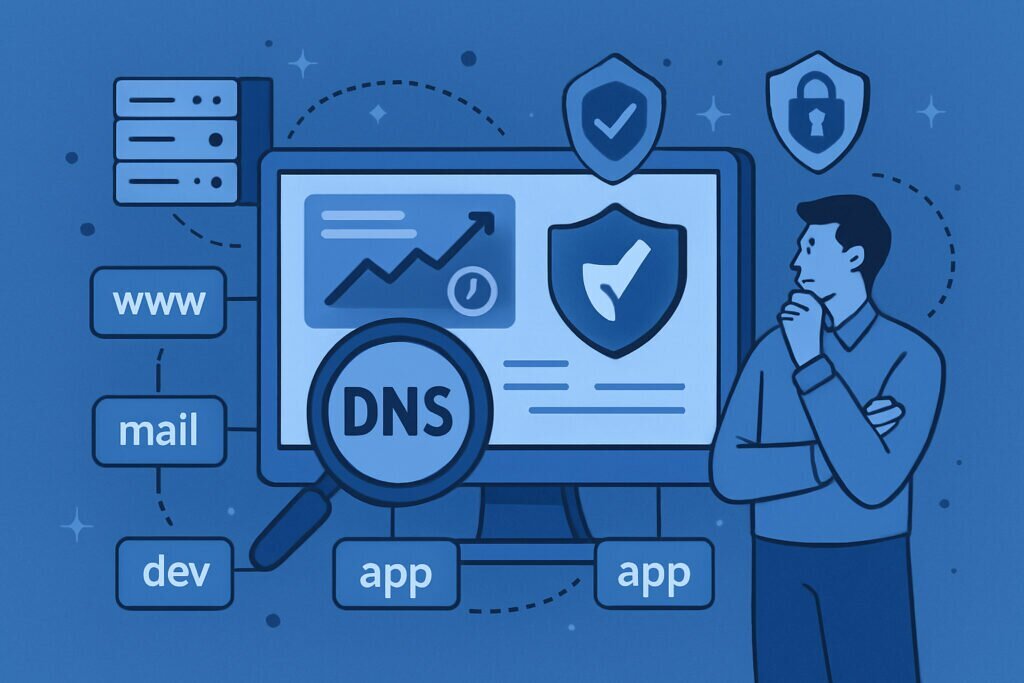
If you manage any kind of web presence, whether it’s a single company website or a sprawling network of applications and services, there’s a good chance you don’t have full visibility into your DNS infrastructure. And that blind spot might be one of the biggest security risks you’re currently ignoring.
Most IT teams focus their security efforts on firewalls, endpoint protection, and access controls. Those are important, of course. But DNS, the foundational layer that makes everything on the internet findable, often gets neglected after the initial setup. The problem is that DNS doesn’t stay static. It grows, changes, and accumulates technical debt over time. Without proper visibility, you’re essentially leaving doors open that you forgot existed.
Why DNS Visibility Matters More Than You Think
Think about how your organization uses subdomains. There’s probably a staging.yourcompany.com for development, maybe a blog.yourcompany.com that was set up years ago, a shop.yourcompany.com that pointed to an old e-commerce platform, and who knows what else. Marketing might have created campaign-specific subdomains. A former developer might have spun up a demo environment. Partners may have been given their own subdomains for API access.
Now multiply that across several years of operation. The result is a collection of DNS records that nobody fully understands anymore. Some point to servers that have been decommissioned. Others reference third-party services your company stopped paying for months ago. Each one of these orphaned records is a potential attack vector.
The most dangerous scenario is a subdomain takeover. This happens when a DNS record still points to an external service, like a cloud hosting provider or a SaaS platform, but your organization no longer controls that service. An attacker can claim that service endpoint and effectively take control of your subdomain. They can host phishing pages, steal cookies, or damage your brand, all under your legitimate domain name.
A Lesson Learned the Hard Way
I once helped a mid-sized company audit their DNS after they noticed strange traffic patterns. They had around 40 known subdomains. The actual count turned out to be over 120. Among those forgotten records, three were pointing to cloud instances that had been terminated. Anyone could have registered those endpoints and served content under the company’s trusted domain. Fortunately, nobody had exploited them yet, but it was pure luck. The whole cleanup took the better part of a week, and the IT manager admitted he hadn’t reviewed DNS records in over two years.
That experience made it clear to me that manual DNS management simply doesn’t scale. You need automated discovery and continuous monitoring to stay ahead of the problem.
What Full DNS Visibility Actually Looks Like
Having real visibility into your DNS infrastructure means more than just keeping a spreadsheet of known records. It involves several key capabilities.
First, you need automated subdomain discovery. This means continuously scanning for all subdomains associated with your primary domain, including ones that were never formally documented. Techniques like certificate transparency log analysis, passive DNS databases, and brute-force enumeration all contribute to building a complete picture.
Second, you need health monitoring for every record. Each DNS entry should be checked regularly. Is the A record pointing to a live server? Is the CNAME resolving correctly? Are there dangling records that reference services you no longer use? Catching these issues early prevents them from becoming security incidents.
Third, email authentication checks matter more than many realize. Missing or misconfigured SPF, DKIM, and DMARC records on subdomains can allow attackers to send spoofed emails that appear to come from your domain. This is a common phishing technique, and it’s entirely preventable with proper DNS hygiene.
Fourth, you need alerting that actually works. Getting notified when a record changes unexpectedly, when a new subdomain appears, or when a previously healthy record starts failing gives you the reaction time to address issues before they cause real damage.
Step-by-Step: Getting Your DNS Under Control
If you’re starting from scratch, here’s a practical approach to improving your DNS visibility.
Start with a full inventory. Use an automated tool to discover all subdomains tied to your domain. Don’t rely on memory or documentation alone. You will almost certainly find records you didn’t know about.
Classify what you find. For each subdomain, determine whether it’s actively used, deprecated, or unknown. Flag anything pointing to external services and verify that you still control those endpoints.
Remove what you don’t need. Delete DNS records for subdomains that are no longer in use. This is the single most effective step you can take to reduce your attack surface.
Set up continuous monitoring. A one-time audit is better than nothing, but DNS infrastructure changes constantly. Automated monitoring ensures you catch new issues as they appear, not months later during the next manual review.
Review email authentication. Check that SPF, DKIM, and DMARC are correctly configured not just for your primary domain but for all active subdomains. This is frequently overlooked and easy to fix.
Common Myths About DNS Security
One persistent misconception is that DNS security is only relevant for large enterprises. In reality, small and medium businesses are often more vulnerable because they lack dedicated security teams and tend to accumulate forgotten infrastructure faster.
Another myth is that HTTPS alone protects you. SSL certificates are essential, but they don’t help if an attacker has taken over your subdomain. They can simply provision their own certificate for it, and visitors will see a perfectly valid padlock icon on a malicious page.
Some people also believe that their hosting provider handles DNS security. Providers manage their own infrastructure, but the responsibility for your DNS records and what they point to sits squarely with you.
Frequently Asked Questions
How often should I audit my DNS records? Ideally, monitoring should be continuous and automated. If you’re doing manual audits, quarterly is a reasonable minimum, but a lot can go wrong in three months.
Is subdomain takeover really that common? Yes. Security researchers regularly find vulnerable subdomains belonging to major organizations. If it happens to companies with large security budgets, it can happen to anyone.
What’s the first thing I should check right now? Look for CNAME records pointing to services you no longer use. These are the most common source of subdomain takeover vulnerabilities.
Can free tools handle DNS monitoring? Services like DNSVigil offer comprehensive subdomain discovery and DNS health monitoring at no cost, making it accessible for organizations of any size. There’s really no excuse to fly blind.
The Bottom Line
DNS visibility isn’t a nice-to-have. It’s a fundamental part of IT security that too many organizations neglect. The infrastructure under your domain is constantly evolving, and without automated discovery and monitoring, you’re relying on luck to keep things secure. Take the time to get full visibility into your DNS, clean up what shouldn’t be there, and put monitoring in place so you never have to wonder what’s lurking in your records again.