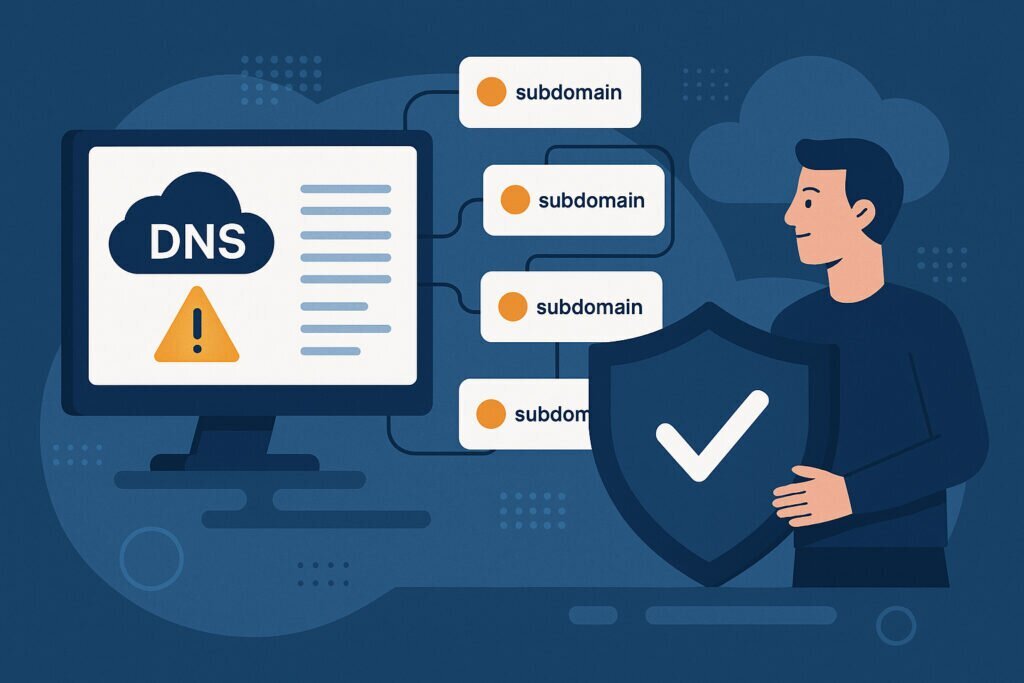
When you think about cybersecurity, DNS monitoring probably isn’t the first thing that comes to mind. Most people focus on firewalls, antivirus software, or employee training. But here’s the reality: your DNS infrastructure is like the foundation of a house. If it’s compromised, everything built on top of it becomes vulnerable. DNS monitoring isn’t just another security checkbox – it’s a fundamental layer of protection that can prevent breaches before they happen and give you visibility into threats you didn’t even know existed.
The Hidden Vulnerabilities in Your DNS Infrastructure
Every organization I’ve worked with has the same problem: forgotten subdomains. You create test.yourdomain.com for a development project. Someone sets up promo2019.yourdomain.com for a marketing campaign. A contractor creates api-staging.yourdomain.com for integration testing. Fast forward two years, and nobody remembers these exist. But the DNS records are still active, often pointing to services you no longer control.
This is where things get dangerous. Attackers actively scan for these orphaned subdomains because they represent easy entry points. If your subdomain points to a cloud service you’ve canceled, an attacker can simply sign up for that same service and take over your subdomain – a technique called subdomain takeover. They now control a legitimate part of your domain, which they can use for phishing, malware distribution, or stealing credentials from your users who trust anything under your domain name.
Real-Time Detection of DNS Anomalies
DNS monitoring operates continuously, checking your domain’s health 24/7. This constant vigilance catches problems the moment they occur. When a DNS record changes unexpectedly, you get an immediate alert. If someone accidentally or maliciously modifies your MX records, potentially redirecting your email to an attacker’s server, you know about it within minutes instead of discovering it weeks later when the damage is done.
I learned this lesson the hard way a few years ago. We had a domain where someone had made a “temporary” DNS change during a server migration. They forgot to change it back. For three months, a portion of our traffic was being routed through an old server in a data center we’d stopped using. We only discovered it during a routine audit. If we’d had proper DNS monitoring in place, we would have been alerted immediately when that record wasn’t reverted.
Preventing Email Security Disasters
Your DNS records control your email authentication through SPF, DKIM, and DMARC records. These tell receiving mail servers which sources are authorized to send email on your behalf. Without proper DNS monitoring, you might not realize that these critical records are missing, malformed, or have been tampered with.
Attackers love to exploit weak email authentication. If your SPF record is missing or incorrect, attackers can send convincing phishing emails that appear to come from your domain. Your customers receive what looks like a legitimate email from you, asking them to update their payment information or click a malicious link. The email passes basic checks because your DNS isn’t properly configured to reject it.
DNS monitoring verifies these authentication records constantly. It alerts you if your SPF record becomes invalid, if DKIM signatures aren’t properly configured, or if someone removes your DMARC policy. This gives you the chance to fix issues before they’re exploited.
Complete Visibility of Your Digital Footprint
Most organizations have no idea how many subdomains they actually have. Different teams create them for various purposes, often without proper documentation or oversight. Marketing creates landing pages. IT sets up internal tools. Partners create integration endpoints. Over time, this becomes an unmanaged mess.
DNS monitoring with automatic subdomain discovery gives you a complete inventory of your digital presence. You can see every subdomain associated with your main domain, even ones created years ago that everyone forgot about. This comprehensive visibility is crucial for security because you can’t protect what you don’t know exists.
Detecting Infrastructure Changes and Potential Breaches
When DNS records change, it often indicates something important is happening. Sometimes it’s legitimate – a planned server migration or service update. Other times, it’s the first sign of a security incident.
DNS monitoring tracks all changes to your records, creating an audit trail of modifications. If an attacker gains access to your DNS management panel and starts redirecting traffic to their servers, you’ll know immediately. This early detection can mean the difference between a minor incident and a major breach.
The monitoring also catches configuration drift. Maybe an engineer makes a quick DNS change to fix an urgent problem but doesn’t document it properly. Over time, these undocumented changes accumulate, creating a gap between what your documentation says your infrastructure looks like and what it actually is. Regular monitoring highlights these discrepancies.
Strengthening Your Overall Security Strategy
DNS monitoring shouldn’t exist in isolation. It’s most effective when integrated with your broader security operations. When combined with log analysis, intrusion detection, and security information and event management (SIEM) systems, DNS monitoring provides crucial context for security incidents.
For example, if your SIEM detects unusual traffic patterns to a particular subdomain, DNS monitoring can immediately tell you what that subdomain is, where it points, and when its records were last modified. This context speeds up incident response significantly.
Common Misconceptions About DNS Security
Many people assume that because their domain registrar offers DNS services, their DNS is secure. That’s not how it works. Registrar DNS services typically just host your records – they don’t actively monitor them for security issues or unauthorized changes. You need dedicated monitoring for that.
Another myth is that DNS only matters for large enterprises. Actually, smaller organizations are often more vulnerable because they have fewer resources dedicated to security and less visibility into their infrastructure. A small business with five forgotten subdomains pointing to expired cloud services is just as vulnerable to subdomain takeover as a large corporation.
Taking Action
Start by inventorying your current DNS records. Make a list of every subdomain you know about, then use DNS enumeration tools to find ones you might have forgotten. Review each subdomain’s purpose and whether it’s still needed. Delete records for services you no longer use.
Set up monitoring for critical DNS records: your main A records, MX records for email, and authentication records like SPF and DKIM. Configure alerts so you’re notified immediately of any changes. Make DNS monitoring part of your regular security reviews, not something you check once and forget about.
Your DNS infrastructure is too important to leave unmonitored. It’s the backbone of your online presence, and keeping it secure should be a fundamental part of your security strategy.