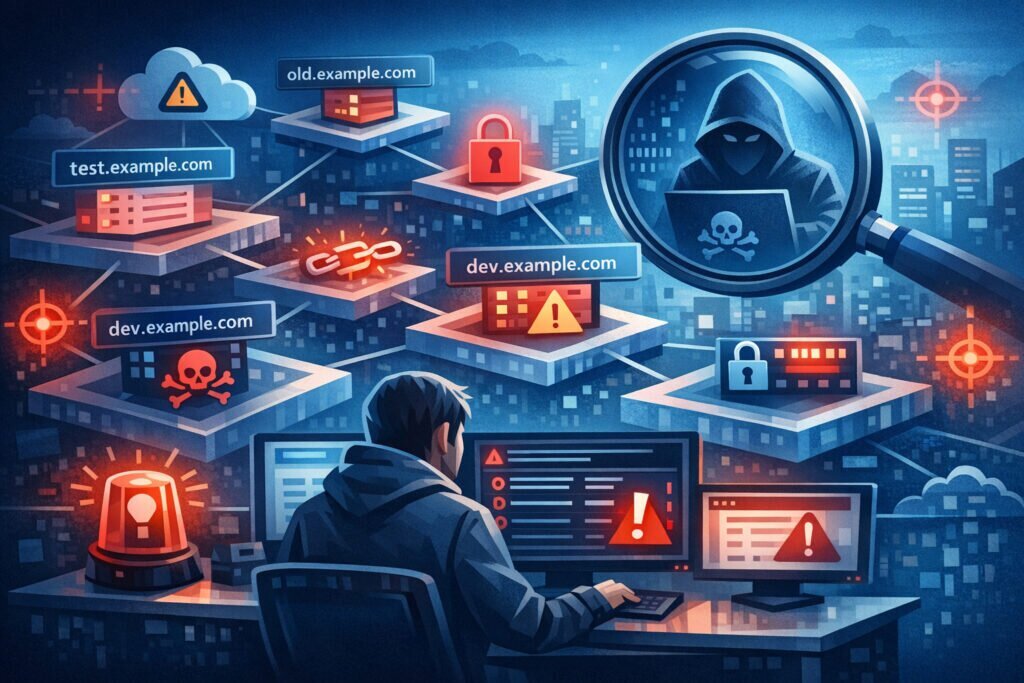
Shadow IT is one of the fastest ways your DNS infrastructure quietly falls apart — and if you’re managing domains for any organization larger than a handful of people, you’ve almost certainly got shadow IT DNS entries you don’t know about. This article covers how shadow IT creates hidden DNS security risks, why traditional auditing misses them, and what you can do to regain control of your domain’s attack surface.
What Shadow IT Actually Looks Like in DNS
Let me paint a picture you’ve probably lived through. A marketing team signs up for a landing page builder, points a CNAME from campaign.yourcompany.com to some third-party platform, and launches their spring campaign. Three months later the campaign ends, the subscription lapses, but nobody tells IT. That CNAME still sits there, pointing to a service your organization no longer controls.
Now multiply that by every department. Dev teams spinning up staging environments on cloud providers. Sales configuring a demo subdomain for a trade show. HR embedding a third-party benefits portal under a company subdomain. Each one creates DNS records — often through self-service cloud dashboards — without going through change management.
This is shadow IT in DNS form. It’s not malicious. It’s people doing their jobs. But every one of those forgotten records is a potential entry point for attackers.
Why Shadow IT DNS Records Are Dangerous
The real problem isn’t that these records exist — it’s that they persist long after the services behind them disappear. A dangling CNAME pointing to a decommissioned Heroku app, an abandoned Azure subdomain, or a cancelled Shopify store is a textbook subdomain takeover target.
An attacker finds your orphaned subdomain, registers the expired service endpoint, and now they control content served under your domain name. They can host phishing pages, steal cookies scoped to your parent domain, or damage your brand reputation — all while appearing completely legitimate to your users and email recipients.
But takeover isn’t the only risk. Shadow IT DNS entries also cause:
Email security gaps. Subdomains created outside IT oversight almost never get proper SPF, DKIM, or DMARC records. Attackers can spoof emails from those subdomains because nothing tells receiving mail servers to reject them.
Certificate abuse. If an attacker takes over a subdomain, they can issue a valid TLS certificate for it through automated providers like Let’s Encrypt. Now they’ve got a trusted HTTPS endpoint on your domain.
Compliance failures. Regulations like GDPR, PCI-DSS, and SOC 2 require you to know and control your attack surface. Shadow DNS records are by definition outside your documented inventory.
The Myth That Your DNS Is Already Under Control
Here’s a misconception I run into constantly: “We manage our DNS through a single provider, so we know everything that’s there.” That sounds logical, but it falls apart fast.
Even if your primary zone file lives in one place, most organizations have subdomains delegated to cloud services, CDN providers, or third-party platforms that manage their own records. Your zone might show an NS delegation to AWS Route 53 for a dev environment — but do you actually know what records exist in that delegated zone? Probably not.
And even within your primary zone, records accumulate silently. I’ve seen zones with 200+ records where fewer than half were documented. The rest were artifacts of projects, tests, and integrations that nobody remembered creating. Manual DNS audits catch what you think to look for. They don’t catch what you’ve forgotten exists.
How to Find Shadow IT DNS Records
You can’t secure what you can’t see. The first step is discovering all subdomains associated with your domain — not just the ones in your zone file, but the ones visible through certificate transparency logs, search engine indexing, and passive DNS databases.
Once you have that inventory, compare it against your documented infrastructure. Every subdomain that doesn’t match a known, active service is a candidate for investigation. Ask these questions for each one:
Who created this record and why? If nobody knows, that’s your first red flag.
Does the target service still exist and is it under our control? Resolve the record. Visit the endpoint. Check whether the service responds with your content or an error page.
Are email security records in place? Check for SPF and DKIM on every subdomain, especially those handling any form of communication.
When was this last reviewed? If the answer is “never,” it’s overdue.
Building a Process That Prevents Shadow DNS Drift
Discovery is only half the solution. You need a process that catches shadow IT DNS changes as they happen — not six months later during a quarterly audit.
Automate subdomain discovery. Tools like DNSVigil continuously scan for new subdomains appearing under your domain. When someone in marketing creates test-landing.yourcompany.com without telling IT, you’ll know about it the same day.
Monitor DNS record changes. Beyond discovering subdomains, you need to know when existing records change. A CNAME that suddenly points somewhere new could mean an attacker has taken control, or it could mean someone made an unauthorized change. Either way, you need to know immediately.
Establish a DNS change policy. This doesn’t have to be bureaucratic. A simple rule — “all DNS changes go through a shared Slack channel and get logged” — dramatically reduces shadow entries. The goal isn’t to slow people down. It’s to maintain visibility.
Schedule regular cleanup. Set a recurring calendar item to review your orphaned DNS records. Remove anything that doesn’t have a clear, active purpose. Every record you delete is one less thing an attacker can exploit.
FAQ
How quickly can shadow IT DNS records become a security risk?
Almost immediately. The moment a third-party service subscription expires or a cloud resource is decommissioned, the DNS record pointing to it becomes a dangling reference. Automated scanners used by attackers can detect these within hours. The window between “we cancelled that service” and “someone took over our subdomain” can be shockingly short — sometimes days.
Can shadow IT DNS issues affect our email deliverability?
Absolutely. Subdomains without proper SPF and DKIM records can be used for spoofing, which degrades your parent domain’s email reputation over time. If a receiver sees spam coming from random.yourcompany.com with no authentication, it affects trust scores for all mail from yourcompany.com. Proper DNS monitoring catches these gaps before they cause deliverability problems.
Is it realistic to completely eliminate shadow IT DNS records?
Not entirely — and trying to block all self-service DNS will just push people toward workarounds that are even harder to track. The realistic goal is continuous visibility. Accept that people will create DNS records outside normal channels, and build monitoring that catches them quickly. A shadow record discovered within 24 hours is manageable. One that sits undetected for two years is a breach waiting to happen.
The bottom line is straightforward: shadow IT isn’t going away, and the DNS records it leaves behind are a growing attack surface. The organizations that stay secure aren’t the ones that prevent every unauthorized DNS change — they’re the ones that detect them fast and act on them before attackers do. Automated, continuous DNS monitoring is the only reliable way to keep up.