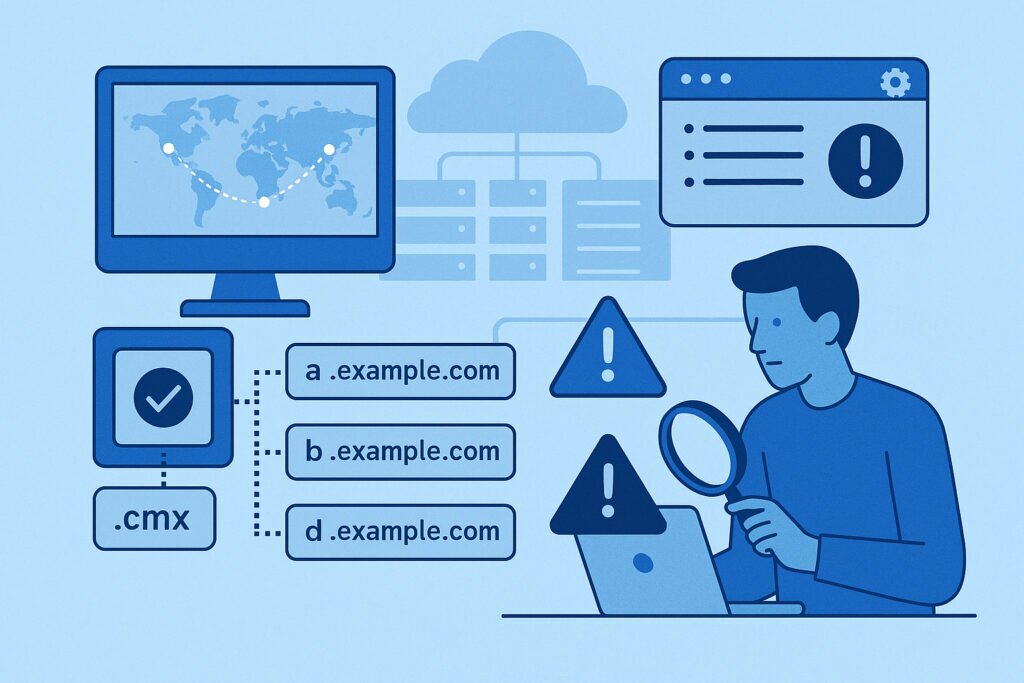
If you manage a website, you probably know about your main domain and maybe a handful of subdomains you actively use. But here’s something that might surprise you: most organizations have far more subdomains than they realize. Old staging environments, forgotten marketing campaigns, employee test sites, partner integrations – they all leave digital footprints that can become serious security vulnerabilities if left unmonitored.
The question isn’t whether you should discover these subdomains, but how. Should you rely on automated tools, or is manual discovery the safer bet? Let’s dig into both approaches and see what actually works in practice.
Why Subdomain Discovery Matters
Before we compare methods, let’s talk about why this matters at all. Every subdomain pointing to your main domain is a potential entry point for attackers. I learned this the hard way a few years back when an old demo.example.com subdomain I’d completely forgotten about got compromised. The subdomain was pointing to a cloud service we’d stopped paying for, and someone else had registered that same service space. Suddenly, they controlled a subdomain under our main domain – a classic subdomain takeover attack.
That incident taught me that subdomain discovery isn’t just about inventory management. It’s about security, compliance, and preventing embarrassing (and expensive) breaches. You can’t protect what you don’t know exists.
Manual Subdomain Discovery: The Traditional Way
Manual discovery is exactly what it sounds like – you roll up your sleeves and start hunting. This typically involves checking your DNS records, reviewing old project documentation, asking team members what they remember, and maybe running a few targeted DNS queries.
The biggest advantage? You get context. When you manually review each subdomain, you understand its purpose, whether it’s still needed, and who’s responsible for it. This hands-on approach can uncover organizational knowledge that automated tools miss entirely.
But here’s the reality: manual discovery is incredibly time-consuming and error-prone. You’ll inevitably miss things. That staging server someone set up three years ago? The one they never documented? You won’t find it by asking around. And if you manage multiple domains or have a distributed team, manual tracking becomes practically impossible.
Manual discovery works okay for very small organizations with just a few subdomains and tight control over DNS changes. For everyone else, it’s a recipe for gaps in your security posture.
Automated Discovery: Let the Tools Do the Work
Automated subdomain discovery tools flip the script entirely. Instead of you hunting for subdomains, these tools actively scan for them using various techniques: certificate transparency logs, DNS brute-forcing, search engine queries, and more.
The advantages are clear. Automated tools are comprehensive, fast, and consistent. They don’t forget to check. They don’t miss things because someone was on vacation. They find subdomains you didn’t even know existed – which is exactly the point.
I started using automated discovery about two years ago, and the first scan was eye-opening. We found 47 subdomains. We knew about 12 of them. The other 35? Complete mysteries. Some were old projects, some were employee experiments, and a few were legitimate security concerns that needed immediate attention.
But automation isn’t perfect either. The main challenge is dealing with false positives and context. An automated tool might flag a subdomain as “discovered,” but it won’t tell you why it exists or whether it should. You still need human judgment to evaluate what you find.
The Hybrid Approach That Actually Works
After trying both methods, here’s what I’ve found works best: use automation for discovery, then apply manual processes for evaluation and decision-making.
Set up an automated tool to continuously scan for new subdomains. You want this running regularly – at least weekly, ideally daily for larger organizations. When the tool finds something new, that triggers a manual review process where someone actually investigates what it is and whether it should exist.
This hybrid approach gives you the comprehensiveness of automation with the contextual understanding of manual review. You’re not drowning in work trying to manually track everything, but you’re also not blindly trusting automated results without understanding them.
Key Features to Look For
If you’re choosing an automated tool, here’s what actually matters:
Continuous monitoring is essential. One-time scans are useful, but subdomains change constantly. You need something that keeps watching and alerts you to changes.
DNS health monitoring should be included. It’s not enough to just discover subdomains – you need to know if their DNS records are healthy, if they’re pointing to active services, and if there are any misconfigurations.
Alert mechanisms that actually work. Getting an email about a new subdomain is helpful. Getting an immediate alert that one of your subdomains is now pointing to a service you don’t control? That’s critical.
Common Mistakes to Avoid
The biggest mistake I see is treating subdomain discovery as a one-time project. You run a scan, clean things up, and assume you’re done. But new subdomains appear constantly as your team works. Without continuous monitoring, you’re back to square one within months.
Another mistake is ignoring low-priority findings. Just because a subdomain isn’t business-critical doesn’t mean it’s not a security risk. Attackers often target the forgotten corners of your infrastructure precisely because they’re less monitored.
The Bottom Line
Manual subdomain discovery made sense when organizations had five subdomains and one person managing DNS. That’s not the world we live in anymore. Modern digital infrastructure is complex, distributed, and constantly changing.
Automated tools aren’t perfect, but they’re necessary. The real question isn’t whether to automate, but how to combine automation with the human judgment needed to make sense of what you discover. Start with automated discovery, apply manual evaluation to the results, and maintain continuous monitoring to catch new subdomains as they appear.
Your attack surface is probably larger than you think. The only way to know for sure is to actually look – and keep looking.