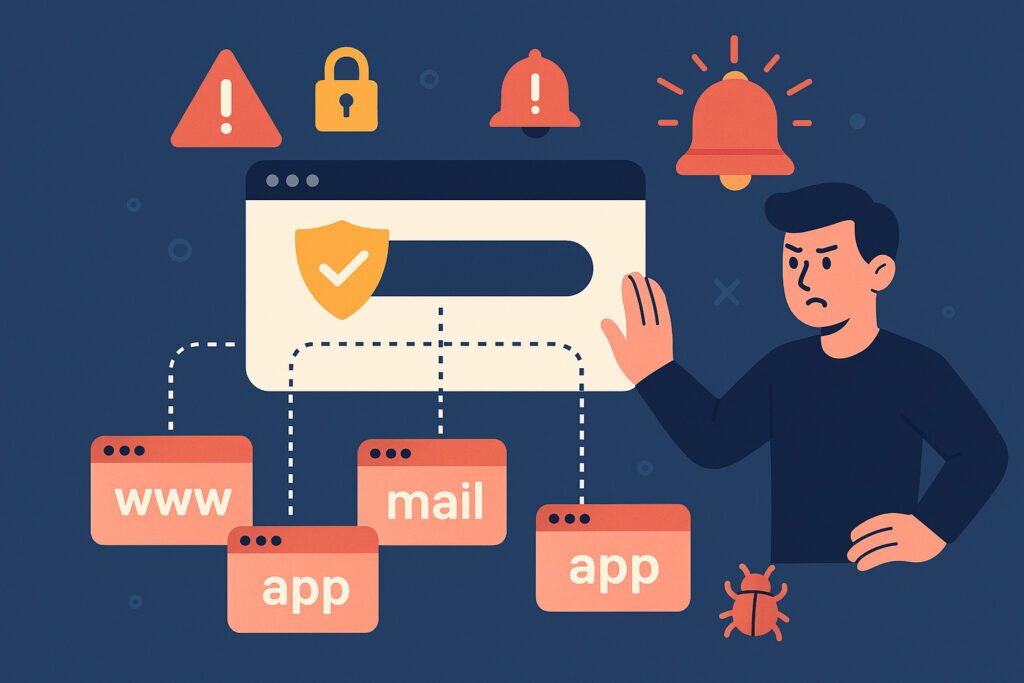
If you manage a website or digital infrastructure, you probably have more subdomains than you realize. Some are active services you use daily. Others might be forgotten test environments, old campaign pages, or demo sites that someone in your organization created years ago. The problem? These forgotten subdomains can become serious security vulnerabilities, and you might not even know they exist until it’s too late.
I learned this the hard way a few years back when a client called in panic mode. Their subdomain was redirecting visitors to a phishing site. Turns out, they had shut down a microsite six months earlier but forgot to remove the DNS records. Someone had noticed the dangling DNS entry and taken control of it. The damage to their reputation was immediate and costly.
What Is Subdomain Takeover?
Subdomain takeover happens when an attacker claims control of your subdomain because it points to a service you no longer own or control. Here’s a common scenario: you create blog.yourcompany.com and point it to a third-party blogging platform. Later, you cancel that service but forget to delete the DNS record. The subdomain still exists in your DNS settings, pointing to nowhere. An attacker can then register that same resource on the blogging platform and suddenly they control what appears on blog.yourcompany.com.
The scary part? To visitors, it looks legitimate because it’s hosted on your actual subdomain. They see your domain name in the address bar and trust it completely.
Why This Matters More Than You Think
The risks go far beyond just having some rogue content appear under your domain. Attackers can use compromised subdomains to distribute malware, run phishing campaigns, steal credentials, or damage your brand reputation. If your subdomain has been around for a while, it might even have good search engine rankings and email deliverability – making it perfect for malicious activities.
I’ve seen companies with 50-100 active subdomains who actually had over 300 DNS records still pointing to various services. That’s 200+ potential security holes they didn’t know about.
Common Vulnerable Scenarios
Understanding where vulnerabilities typically occur helps you identify your risks. Cloud services are a major source – you might have pointed a subdomain to AWS S3, Azure, or Google Cloud resources that you later deleted. The DNS record remains, but the resource is gone.
Third-party platforms create similar issues. Content management systems, help desk software, landing page builders, and e-commerce platforms all work this way. When you cancel the service, the external resource disappears but your DNS often stays configured.
Employee-created environments are particularly troublesome because nobody maintains a central inventory. Developers spin up test.yoursite.com or staging-newfeature.yoursite.com for specific projects. When they move on or the project ends, these orphaned subdomains remain in DNS.
How to Protect Your Domain Infrastructure
Prevention starts with visibility. You cannot protect what you don’t know exists. Begin by conducting a complete audit of all your DNS records. Not just the ones you actively use – all of them. Export your full DNS zone file and review every single A record, CNAME, and other entries.
For each subdomain, verify that it points to a resource you actually control. If it’s a CNAME pointing to a third-party service, confirm that service is still active and under your account. Test each subdomain in a browser. Does it load properly? Does it show an error about missing resources? Errors often indicate dangling records.
Create and maintain an inventory. Use a spreadsheet to document every subdomain: what it’s for, where it points, who manages it, and when it was last verified. This sounds tedious, but it’s essential. Set a reminder to review this inventory quarterly.
Implementing Automated Monitoring
Manual audits are good for getting started, but they don’t scale and they’re not real-time. You need continuous monitoring that alerts you when problems appear. This means automated systems that regularly check your DNS configuration and verify that all your subdomains point to resources you control.
Effective monitoring should discover new subdomains automatically. Organizations create subdomains faster than they update documentation. Your monitoring system needs to find these without manual input. It should also verify DNS health continuously – checking for broken CNAMEs, records pointing to released cloud resources, and missing security configurations like SPF or DKIM for mail-related subdomains.
Most importantly, you need immediate alerts when something changes or breaks. If a subdomain suddenly points to an unrecognized IP address or shows signs of takeover, you need to know within minutes, not weeks.
Establishing Clear Policies
Technology alone won’t solve this problem. You need organizational processes. Establish a clear policy: before anyone can create a new subdomain, it must be registered in your central inventory. Before anyone decommissions a service, they must remove the corresponding DNS records.
Designate someone responsible for DNS management. In many organizations, DNS just “happens” with no clear ownership. That’s a recipe for security problems. One person or team should have authority and responsibility for the domain’s DNS infrastructure.
Common Misconceptions About Subdomain Security
Many people think that simply deleting a cloud resource or canceling a service is enough. It’s not. The DNS record continues to exist and point to that now-available resource. Others believe that only large organizations face this risk. Actually, smaller companies often have worse subdomain hygiene because they lack dedicated security staff.
Some assume that HTTPS protects against subdomain takeover. While HTTPS is important, it doesn’t prevent takeover if an attacker can claim the resource your subdomain points to. The SSL certificate might show a warning, but many users click through those.
Frequently Asked Questions
How often should I audit my DNS records? At minimum, quarterly for manual reviews. But automated monitoring should run daily or even hourly for critical domains.
What should I do if I find a vulnerable subdomain? Immediately remove the DNS record if the subdomain isn’t needed. If it is needed, point it to a resource you control and verify it’s working correctly.
Can subdomains I deleted years ago still be vulnerable? If you removed the subdomain from your website but left the DNS record, yes. DNS records persist until explicitly deleted.
How do I know if a takeover has already happened? Check each subdomain regularly. If it loads content you didn’t create or redirects somewhere unexpected, investigate immediately.
The bottom line is simple: subdomain takeover is preventable, but only if you actively manage your DNS infrastructure. Don’t wait for a security incident to discover subdomains you forgot about. Start with a complete audit, implement continuous monitoring, and establish clear policies for subdomain management. Your domain reputation and security depend on it.