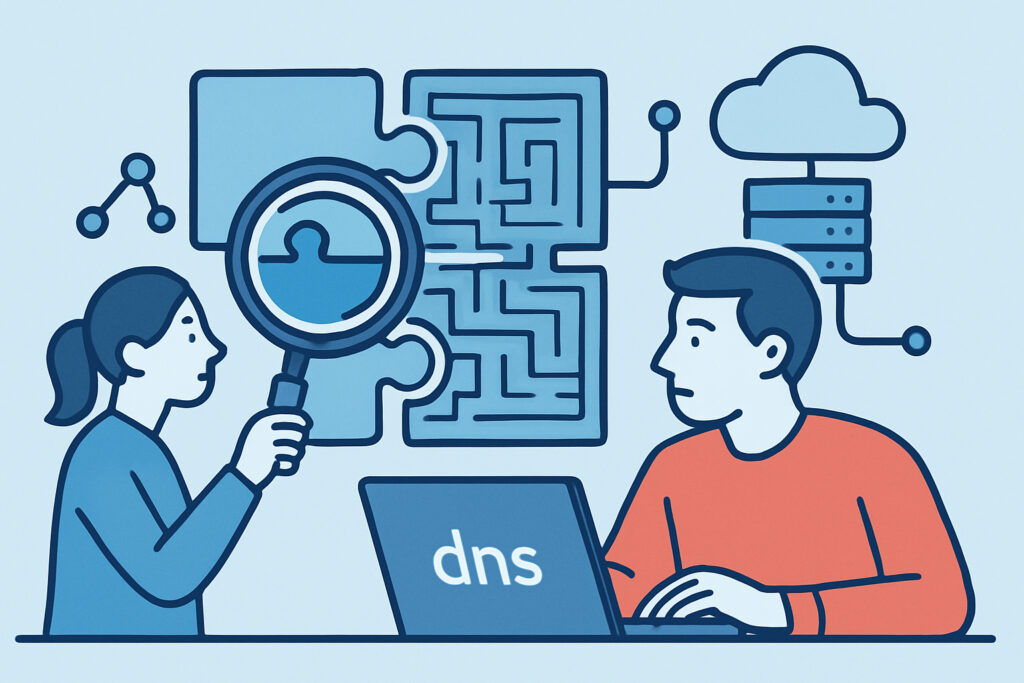
The hidden complexity of modern DNS infrastructure extends far beyond what most organizations realize. As businesses expand their digital presence through multiple subdomains, testing environments, and third-party integrations, their DNS infrastructure grows into a sprawling network that becomes increasingly difficult to manage and secure.
Most IT teams drastically underestimate the scope of their DNS footprint. A typical mid-sized company that thinks it has 10-15 subdomains often discovers 50-100 active DNS records when they conduct a thorough audit. These forgotten entries create security vulnerabilities, compliance gaps, and operational blind spots that can cost organizations dearly.
The Exponential Growth of DNS Complexity
Modern organizations create subdomains at an unprecedented rate. Development teams spin up testing environments with names like dev-feature-branch.company.com. Marketing campaigns generate temporary landing pages. Partner integrations require dedicated API endpoints. Employee demos create one-off presentations sites.
Each subdomain represents a potential security risk if not properly managed. The real complexity emerges when these records outlive their original purpose. The marketing campaign ends, but campaign2023.company.com still points to an expired service. The developer leaves, but their personal testing subdomain remains active in DNS.
A common misconception is that unused subdomains are harmless because “nobody knows about them.” This thinking is dangerously flawed. Attackers routinely perform subdomain enumeration to discover these forgotten assets and exploit them through takeover attacks.
The Multi-Layer Challenge of DNS Management
DNS complexity operates on multiple interconnected levels that most organizations fail to address comprehensively. The first layer involves basic record management – ensuring A records, CNAME records, and MX records point to the correct destinations. But this represents only the surface level.
The second layer encompasses security configurations. SPF records prevent email spoofing but require constant updates as services change. DKIM signatures need regular rotation. DMARC policies must align with business requirements. Many administrators focus on getting these records working initially but neglect ongoing maintenance.
The third layer involves infrastructure dependencies. Modern applications rely on CDNs, load balancers, and cloud services that can change IP addresses or deprecate services without notice. A subdomain pointing to a decommissioned AWS S3 bucket becomes an immediate takeover target.
Cross-team coordination adds another dimension of complexity. When the marketing team launches a campaign using external services, they rarely inform IT about the DNS implications. When developers create staging environments, they seldom consider the long-term security ramifications of those DNS records.
Hidden Dependencies and Cascade Failures
DNS infrastructure complexity creates hidden dependencies that can trigger cascade failures across seemingly unrelated systems. Consider a scenario where a forgotten testing subdomain points to an expired third-party service. An attacker claims that service and suddenly gains the ability to intercept traffic intended for your organization.
These dependencies become particularly dangerous in multi-cloud environments. Organizations using AWS, Google Cloud, and Azure simultaneously often create DNS records pointing to resources across all three platforms. When services migrate or get decommissioned, the corresponding DNS records frequently get overlooked.
The complexity multiplies with wildcard DNS records. A single wildcard entry like *.internal.company.com can create thousands of potential subdomains. While wildcards offer convenience, they also create massive attack surfaces if the target service becomes compromised or abandoned.
Certificate management adds another layer of interdependency. SSL certificates tied to specific subdomains must be renewed regularly. When certificates expire on forgotten subdomains, those endpoints become security risks that attackers can exploit through certificate impersonation attacks.
The Scale Problem: Why Manual Management Fails
Manual DNS audits become impractical as organizations scale beyond a few dozen subdomains. The traditional approach of maintaining spreadsheets or documentation breaks down when DNS records change frequently across multiple teams and departments.
Human error compounds the complexity problem. Administrators make typos in DNS configurations, create duplicate records, or forget to remove temporary entries. A single character mistake in a DNS record can redirect traffic to unintended destinations or create resolution failures that impact business operations.
Time delays in manual processes create security windows for attackers. When a service gets decommissioned, the corresponding DNS cleanup often happens days or weeks later. During this gap, attackers can claim the abandoned service and hijack the subdomain.
Shadow IT practices exacerbate the scale problem. Employees create subdomains using personal accounts or unapproved services, generating DNS records that never appear in official documentation. These shadow subdomains remain invisible to security teams until they become attack vectors.
Automated Solutions for DNS Complexity Management
Addressing DNS infrastructure complexity requires automated monitoring and discovery systems that can keep pace with modern business requirements. Automated subdomain discovery tools continuously scan for new DNS records associated with your domain, ensuring complete visibility into your digital footprint.
Real-time monitoring detects configuration changes, certificate expirations, and service failures immediately rather than during scheduled manual checks. This rapid detection enables quick remediation before security vulnerabilities can be exploited.
DNS infrastructure mapping provides comprehensive visualization of complex domain relationships. Understanding how subdomains connect to various services and dependencies enables better security planning and risk assessment.
Automated health checks verify that DNS records point to active, legitimate services. When a subdomain starts pointing to an unclaimed resource, immediate alerts enable rapid response to prevent takeover attacks.
Building Resilience into Complex DNS Infrastructure
Resilient DNS infrastructure requires proactive policies that address complexity from multiple angles. Establish standardized naming conventions for subdomains that include expiration dates or purpose indicators. Implement approval workflows for new DNS records that require security team review.
Create automated cleanup policies that flag DNS records for review after specific time periods. Records created for temporary purposes should have built-in expiration dates that trigger automatic removal unless explicitly renewed.
Regular security assessments should include comprehensive DNS audits that map all subdomains to their current purposes and owners. Any subdomain without a clear business justification should be considered for removal.
Implement monitoring that tracks DNS record age and usage patterns. Records that haven’t received traffic in months may indicate abandoned resources that should be investigated for potential security risks.
Frequently Asked Questions
How many subdomains does a typical organization actually have?
Most organizations have 5-10 times more subdomains than they realize. Companies that estimate 20 subdomains often discover 100-200 active DNS records during comprehensive audits. This gap between perception and reality creates significant security blind spots.
What’s the biggest risk of complex DNS infrastructure?
Subdomain takeover attacks represent the most serious immediate threat. When DNS records point to abandoned services, attackers can claim those services and hijack your subdomains. This gives them the ability to host malicious content under your trusted domain name, potentially damaging your reputation and enabling phishing attacks against your customers.
Can DNS complexity affect website performance?
Yes, poorly managed DNS configurations can significantly impact performance. Misconfigured records increase resolution times, stale entries can cause timeouts, and complex dependency chains create single points of failure. DNS health directly correlates with website reliability and user experience.
The hidden complexity of modern DNS infrastructure demands automated, comprehensive monitoring solutions. Organizations that continue relying on manual processes and incomplete visibility will inevitably face security incidents, compliance failures, and operational disruptions. Investing in proper DNS infrastructure management isn’t just about security – it’s about maintaining the digital foundation that modern businesses depend on.