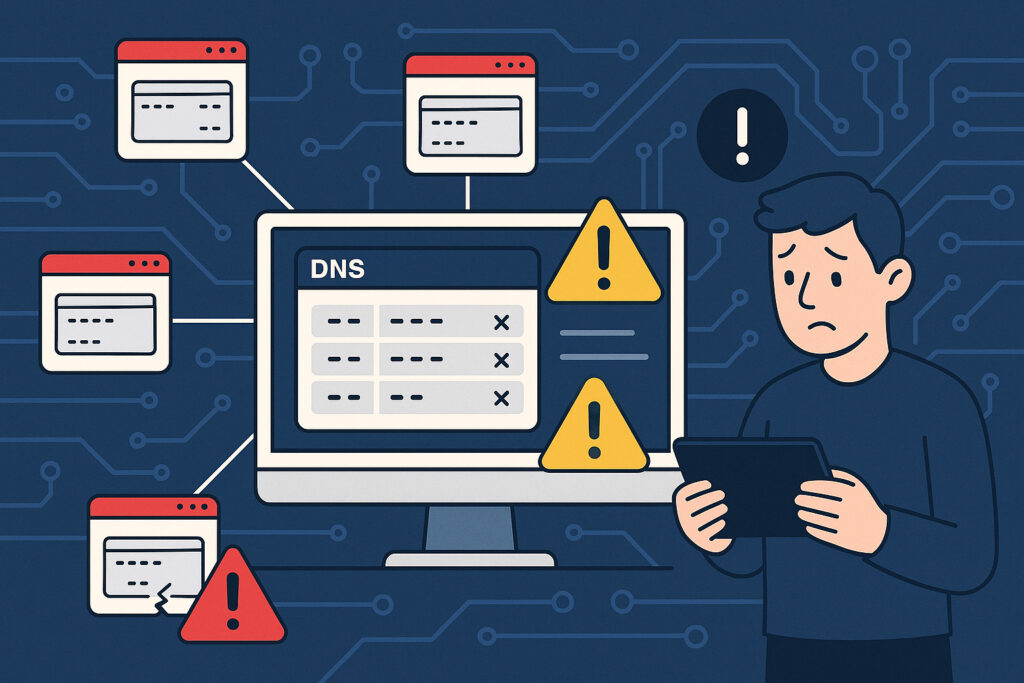
Every modern organization runs on dozens, sometimes hundreds, of subdomains. Some are crucial to daily operations, while others were created for a single campaign, a temporary test environment, or a quick demo that nobody remembers anymore. Here’s the uncomfortable truth: those forgotten subdomains are probably still out there, and they’re creating hidden risks in your infrastructure that hackers know exactly how to exploit.
Why Subdomains Multiply Like Rabbits
It starts innocently enough. Your marketing team needs a landing page for a new campaign, so they spin up promo.yourdomain.com. The development team creates staging.yourdomain.com for testing. A partner needs API access at api-partner.yourdomain.com. Before you know it, you’re managing an entire ecosystem of subdomains that nobody has a complete inventory of.
The problem isn’t creating these subdomains. The problem is what happens afterward. Projects end, employees leave, priorities shift, and those subdomains get abandoned. But their DNS records? Those often remain active, pointing to resources that no longer exist or services you no longer control. If you’ve never done a thorough subdomain enumeration, you might be surprised by how many forgotten entries are lurking in your zone files.
The Real-World Danger of Subdomain Takeover
I learned about subdomain takeover attacks the hard way a few years back. We had shut down an old promotional site hosted on a cloud platform, removed all the files, canceled the service. Everything seemed fine until our security monitoring flagged suspicious activity. Someone had registered a new account on that same cloud platform, claimed the subdomain we’d abandoned, and was now serving phishing content from what appeared to be our legitimate domain.
The attack worked because our DNS record still pointed to that cloud service, but we no longer owned the resource there. An attacker simply filled the vacuum we’d left behind. This isn’t a theoretical risk – it’s happening constantly across the internet. Understanding how subdomain takeover attacks work is essential for anyone managing DNS infrastructure.
DNS Configuration Drift Creates Vulnerabilities
Even subdomains you’re actively using can become security risks through DNS configuration drift. Email authentication records like SPF and DKIM get outdated when you change email providers. SSL certificates expire on forgotten subdomains. DNS records point to decommissioned servers or old IP addresses that are now assigned to someone else’s infrastructure.
Each of these scenarios creates an opportunity for attackers. A subdomain with weak or missing SPF records can be used to send convincing phishing emails that appear to come from your domain. Proper DNS configuration for email authentication across all your subdomains is one of the most effective defenses against spoofing. An expired SSL certificate signals to attackers that nobody’s watching this particular corner of your infrastructure.
The Inventory Problem Nobody Talks About
Ask any IT team for a complete list of their organization’s subdomains, and you’ll likely get an uncomfortable silence. Most organizations don’t have this information readily available. Subdomains get created through various channels – web hosting control panels, cloud platform dashboards, DNS management interfaces – and there’s rarely a centralized system tracking all of them.
Here’s a myth worth busting: many teams believe their DNS provider’s management console shows everything they need to know. It doesn’t. Subdomains can be created via wildcard records, delegated zones, or third-party services that manage their own DNS entries. A provider dashboard only shows you what’s explicitly configured in that one zone – not the full picture of what’s actually resolving under your domain.
Automated Discovery Is No Longer Optional
Manual subdomain audits are both time-consuming and incomplete. By the time you finish documenting your subdomains, new ones have been created and old ones have been forgotten again. If you’re still relying on spreadsheets and quarterly reviews, it’s worth understanding why manual DNS audits are no longer enough.
Modern DNS monitoring tools like DNSVigil can automatically discover all subdomains associated with your main domain, then continuously monitor their DNS health. They check for common misconfigurations, detect when subdomains point to resources you no longer control, and alert you to potential security issues before attackers exploit them. The combination of automatic subdomain discovery and ongoing health monitoring closes the gap that manual processes simply can’t fill.
What You Should Monitor Right Now
Start by identifying all subdomains linked to your primary domains. Pay special attention to subdomains pointing to third-party services you no longer use – cloud platforms, content delivery networks, hosting providers. These are prime targets for takeover attacks.
Check your email authentication records across all subdomains that send email. Missing or misconfigured SPF, DKIM, and DMARC records are an open invitation for email spoofing. Verify that SSL certificates are current and properly configured on all active subdomains.
Document which subdomains are actively used and which are legacy remnants. For those old subdomains, either remove their DNS records entirely or redirect them to your main domain. Don’t leave them pointing to nowhere.
Building a Long-Term Subdomain Strategy
Create a simple approval process for new subdomains that includes documentation requirements. When someone needs a new subdomain, they should record its purpose, owner, and expected lifespan. This doesn’t need to be bureaucratic – just a basic record that prevents subdomains from disappearing into the void.
Set up regular automated scans that discover and catalog your subdomains. Configure alerts for common security issues like expired certificates, misconfigured DNS records, or subdomains pointing to services you no longer control. Make subdomain security part of your routine infrastructure monitoring, not a special project you tackle once a year.
Frequently Asked Questions
How do I find all the subdomains connected to my domain?
The most reliable approach is using automated subdomain discovery tools that combine multiple techniques – DNS zone analysis, certificate transparency logs, and brute-force enumeration. DNSVigil does this automatically and continuously, so you always have an up-to-date inventory without manual effort.
Can a forgotten subdomain really be taken over by an attacker?
Absolutely. If your DNS record points to a third-party service you no longer use – say, a canceled cloud hosting account or an old CDN endpoint – anyone who registers that same resource on the provider’s platform can serve content under your subdomain. This is called a dangling DNS or subdomain takeover attack, and it’s one of the most common yet overlooked vulnerabilities in modern infrastructure.
How often should I audit my DNS infrastructure for forgotten subdomains?
Manual audits done quarterly or yearly aren’t frequent enough. Subdomains can be created and abandoned within days. Continuous automated monitoring is the only practical solution – it catches new subdomains as they appear and flags risks immediately, rather than waiting for the next scheduled review.
The digital infrastructure you don’t know about is often more dangerous than the infrastructure you’re actively managing. Those forgotten subdomains represent doors you didn’t realize were unlocked. Taking control of your complete DNS footprint isn’t just good security practice – it’s essential for protecting your organization’s reputation and preventing attacks that exploit the infrastructure you’ve unintentionally abandoned.